
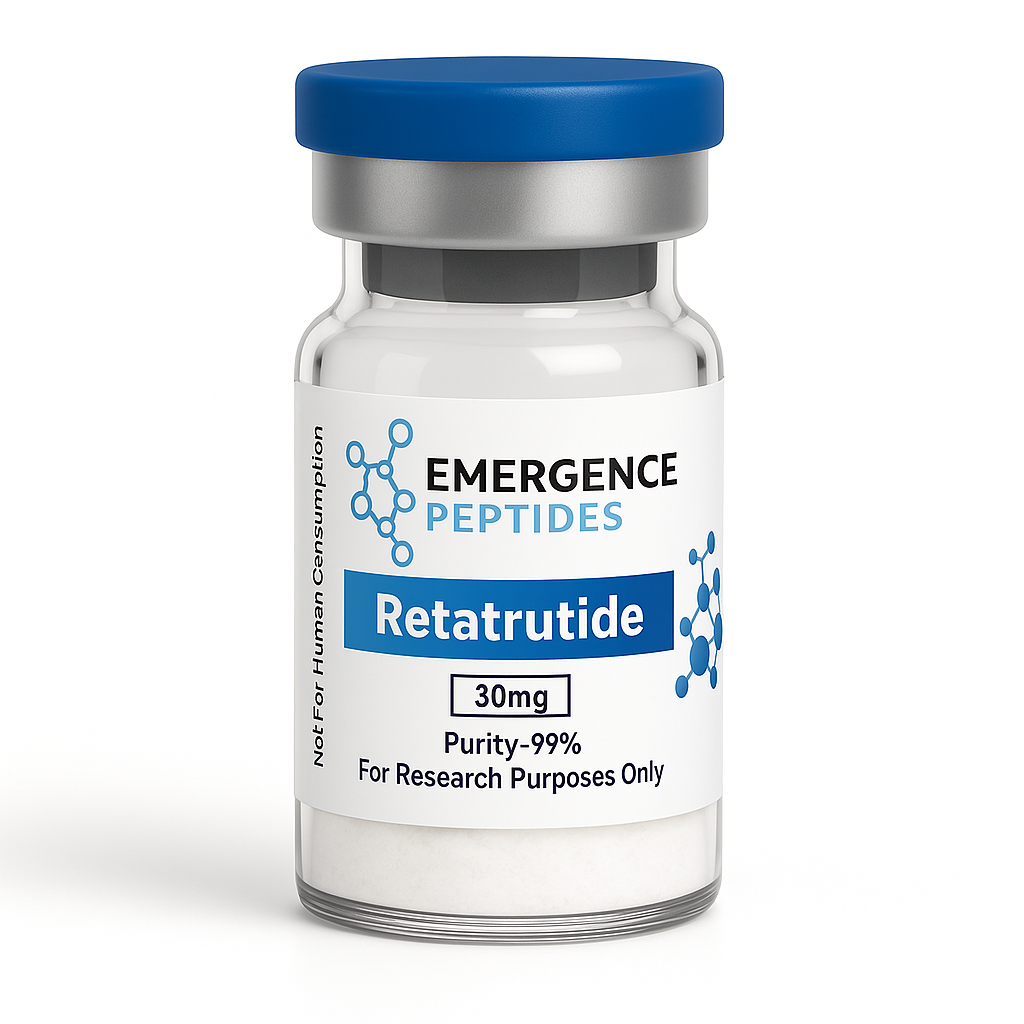
RETATRUTIDE FOR SALE
Price range: $95 through $295
Gene Names: GLP1R; GLP-1; GLP-1R; GLP-1-R
Other Names: GLP-1 receptor; Glucagon-like peptide-1 receptor; Gastric inhibitory polypeptide receptor; GIPR; GIP-R; Glucose-dependent insulinotropic polypeptide receptor; GCGR; Glucagon receptor; GL-R; LY3437943
Host / Reactivity: Reactivity: Human
Purity: Greater than 95% purity confirmed by HPLC and purified using HPLC methods.
Applications: Research-grade biosimilar used for laboratory and scientific research purposes.
Retatrutide how to get – Retatrutide cost
Retatrutide is typically obtained through a qualified medical provider who evaluates whether the treatment is appropriate for an individual. This process usually includes a clinical assessment, a discussion of treatment goals, and continuous monitoring to ensure dosing is managed safely. To get retatrutide and for retatrutide cost, visit our shop for retatrutide for sale.
Retatrutide is a synthetic peptide made of 39 amino acids and built from a GIP-based structure. Retatrutide peptide includes modified residues (Aib2, Aib20, aMeL13) and a C20 fatty diacid attachment that improves stability and supports albumin binding. The peptide functions as a triple receptor agonist, activating glucagon receptors (GCGR), glucagon-like peptide-1 receptors (GLP-1R) and showing strong activity at glucose-dependent insulinotropic polypeptide receptors (GIPR) in laboratory studies. Through this combined receptor activity, Retatrutide influences metabolic processes such as energy expenditure, nutrient utilization, and metabolite regulation, including amino acid and lipid metabolism, as observed in cellular and animal research models.
Retatrutide dosing – Retatrutide dosage
- Weeks 1–4: 1 mg taken once per week
- Weeks 5–8: 2 mg taken once per week
- Weeks 9–12: 4 mg taken once per week
- Weeks 13–16: 8 mg taken once per week
- Weeks 17 and beyond: Up to 12 mg taken once per week
Retatrutide Side Effects and Safety Warnings
Clinical studies on Retatrutide show that around 6% to 16% of users stopped treatment because of side effects, mainly stomach and digestive discomfort. Most of these symptoms improve over time as the body adapts to the medication. Since retatrutide works on GLP-1 and GIP receptors, its side effects are very similar to those linked with Zepbound.
The most common retatrutide side effects reported in clinical trials were related to digestion and stomach health. These symptoms are usually more noticeable during the first weeks of treatment or after increasing the dosage. In most cases, the effects are mild to moderate and become less severe as treatment continues.
- Nausea: Nausea is the most commonly reported retatrutide side effect. It is usually strongest during the early stages of treatment and after dose increases. For most people, the discomfort becomes milder as the body gets used to the medication.
- Diarrhea and Constipation: Both diarrhea and constipation can happen because retatrutide slows digestion. These digestive side effects are common with GLP-1 weight loss medications and are generally temporary during treatment adjustment.
- Vomiting: Vomiting can also occur, especially during dosage increases. Like nausea, this side effect is often temporary and improves once the body adapts to the treatment.
Serious side effects linked to Retatrutide are considered rare, but they still require proper medical attention and monitoring. Researchers continue to study the long-term safety profile of this next-generation GLP-1 medication during ongoing clinical trials.
| Units | 5mg, 10mg, 15mg, 20mg, 30mg |
|---|
Be the first to review “RETATRUTIDE FOR SALE”
Related products
Peptides
Peptides
Reviews
There are no reviews yet.